Digital Transformation and Circular Economy
The Digital Transformation and Circular Economy group primarily employs experimental methods to study issues related to sustainability and digitalization. Our goal is to gain deeper insights into individual decision-making and to identify key elements that could contribute to a more sustainable and more digital economy in the future.

Jun-.Prof. Dr. Dr. Daniel Hermann
Our group covers a broad range of research questions spanning general economics, environmental economics, psychology, and agricultural economics. Using surveys, experiments, and field data, we investigate several topics within these areas. First, we analyze economic preferences (e.g., risk attitudes, loss aversion, and time and social preferences) and the methodological approaches used to elicit them. Second, we study individual decision-making behavior: when, why, and how do farmers and entrepreneurs invest? What drives the adoption of new (digital) technologies? Third, we examine various approaches to building a more sustainable economy. In this context, we analyze topics such as water conservation, soil organic carbon, circular economy, land degradation, and biodiversity loss.
News
AFECO Study Excursion to Germany: Exploring German Agriculture and Agribusiness
After a one-week excursion through Germany, the students of our AFECO master’s program have returned to Bonn. They look back on an exciting and insightful week with a wide range of visits covering the agricultural and food value chain — from breeding and farming to processing and food distribution.
The program included visits to a goat farm, plant breeding facilities, dairy production, agricultural farms, the Bremen Cotton Exchange, and Naturkost Kontor Bremen. The excursion offered many opportunities to deepen practical knowledge, ask questions, and discuss current challenges in German agriculture.
We would like to sincerely thank our hosts: Meister Ziegenhof, Hans-Josef Berghoff, RAGT Seeds, Pfaffendorf Molkerei, Schrader Agrar, Leonard Hyfing, the Bremen Cotton Exchange with Jens Wirth and Elke Hortmeyer, and Naturkost Kontor Bremen GmbH (NKK).
Field Research in La Moskitia, Honduras, for the Project “CiCo – Circular Coconut”
As part of the CiCo – Circular Coconut project, we have completed our data collection in La Moskitia (Honduras). Over several weeks, we collected data through 184 standardized individual surveys and approximately 22 hours of recorded qualitative research, including semi-structured interviews, workshops, and focus group discussions.
The study addresses three main research areas:
(1) the relationships between aspirations, empowerment, and commercialization in agriculture;
(2) the potential for sustainable marketing of coconuts and coconut by-products, including women-led microenterprises; and
(3) the design characteristics of sustainable cooperation and cooperative models in the region.
The data are currently being processed, and we look forward to sharing initial results and further insights from the analysis soon. If you are interested in the data, please feel free to contact Vanessa Berghoff—this may also provide opportunities for a thesis project.
The project received research funding from the Transdisciplinary Research Area “Technology and Innovation for a Sustainable Future” (TRA Sustainable Futures) at the University of Bonn.
Contact: Vanessa Berghoff
Data Collection in Northern Ghana – A Look Back at Our Field Research with Smallholder Farmers
Although some time has passed since the fieldwork was completed, we are excited to share insights from our data collection in Northern Ghana. In October 2024, our team member Vanessa Berghoff conducted a field study as part of her PhD research, exploring smallholder farmers decision-making.
The study was carried out across three districts in northern Ghana, a region characterized by a predominantly rural population and widespread reliance on subsistence farming. Agriculture in this area centers on staple crops such as maize, cassava, plantain, yam, and groundnuts.
Over the course of several weeks, Vanessa worked with a team of ten trained local enumerators to collect the data of more than 400 farmers. The data collection combined experimental methods and survey-based instruments. Participants took part in incentivized behavioral experiments assessing time and risk preferences, followed by a comprehensive survey on socio-economic and agricultural conditions. To ensure clarity across varying literacy levels, the team used color visuals and physical aids—such as a bag of numbered balls to demonstrate probabilities—alongside interactive explanations.
Despite facing the challenges of a severe drought season, the farmers showed remarkable openness and resilience, generously sharing their knowledge, experiences, and strategies with us. Each day in the field was a powerful learning experience, offering not only valuable insights for our research but also a deeper appreciation of rural livelihoods and the strength of the communities who welcomed us so warmly.
As data analysis continues, we look forward to sharing results that can contribute to more farmer-centered agricultural policies and support systems.
If you are interested in learning more or discussing the research, we welcome your questions.
Contact: Vanessa Berghoff
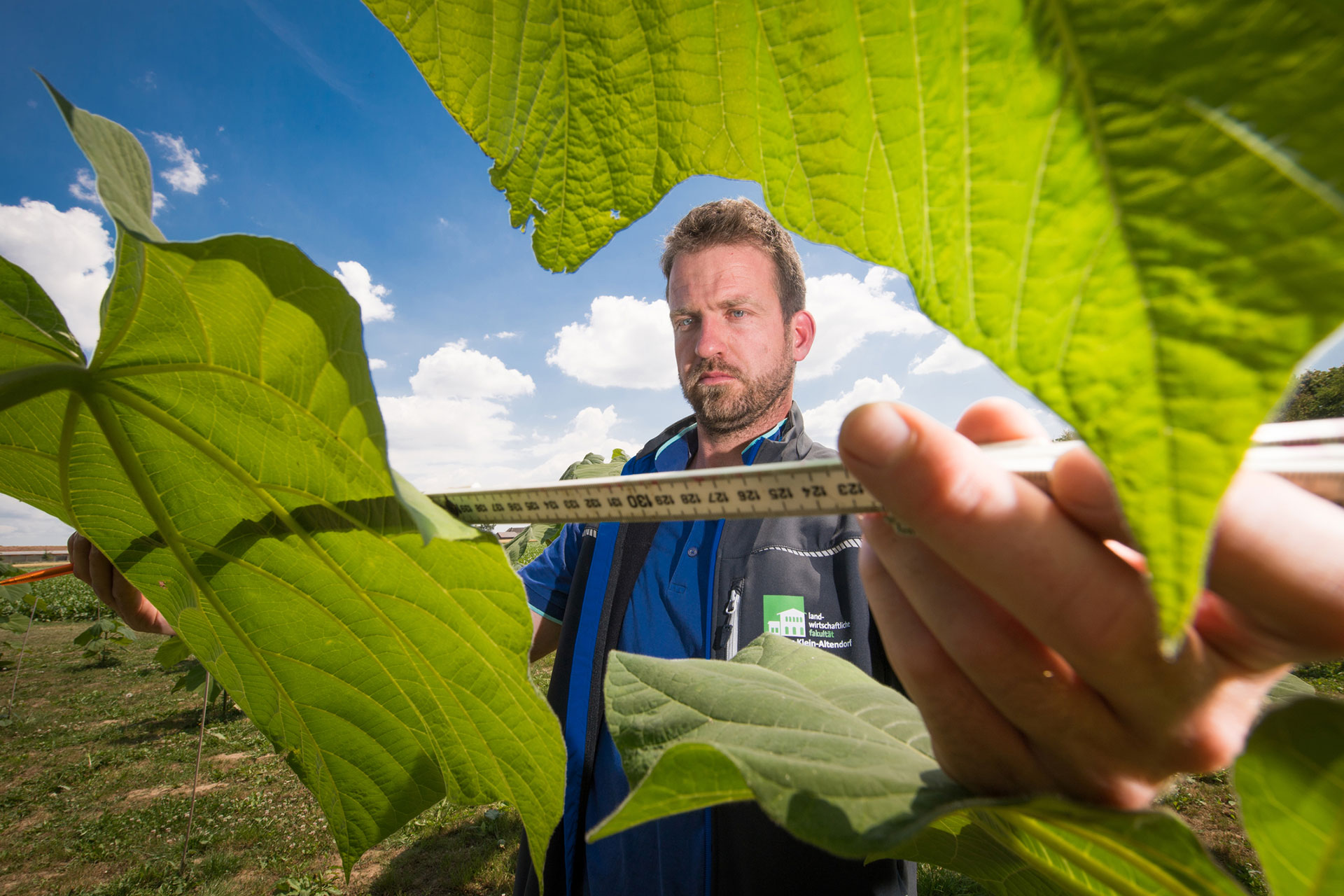
MisCO2 (BMFTR)
Within the MisCO2 project, we work in collaboration with Ralf Pude’s research group to evaluate the economic feasibility and ecological performance of renewable construction materials made from Miscanthus. The project focuses on identifying relevant parameters and assessing their implications for sustainable building applications.

CiCo (TRA Sustainable Futures)
The aim of the project “CiCo – Circular Coconut” is to explore the potential for sustainable and circular coconut value chains in La Moskitia (Honduras). The project focuses on empowerment and commercialization in agriculture, sustainable marketing strategies for coconut products—including women-led microenterprises—as well as the design of cooperative organizational models in the region.
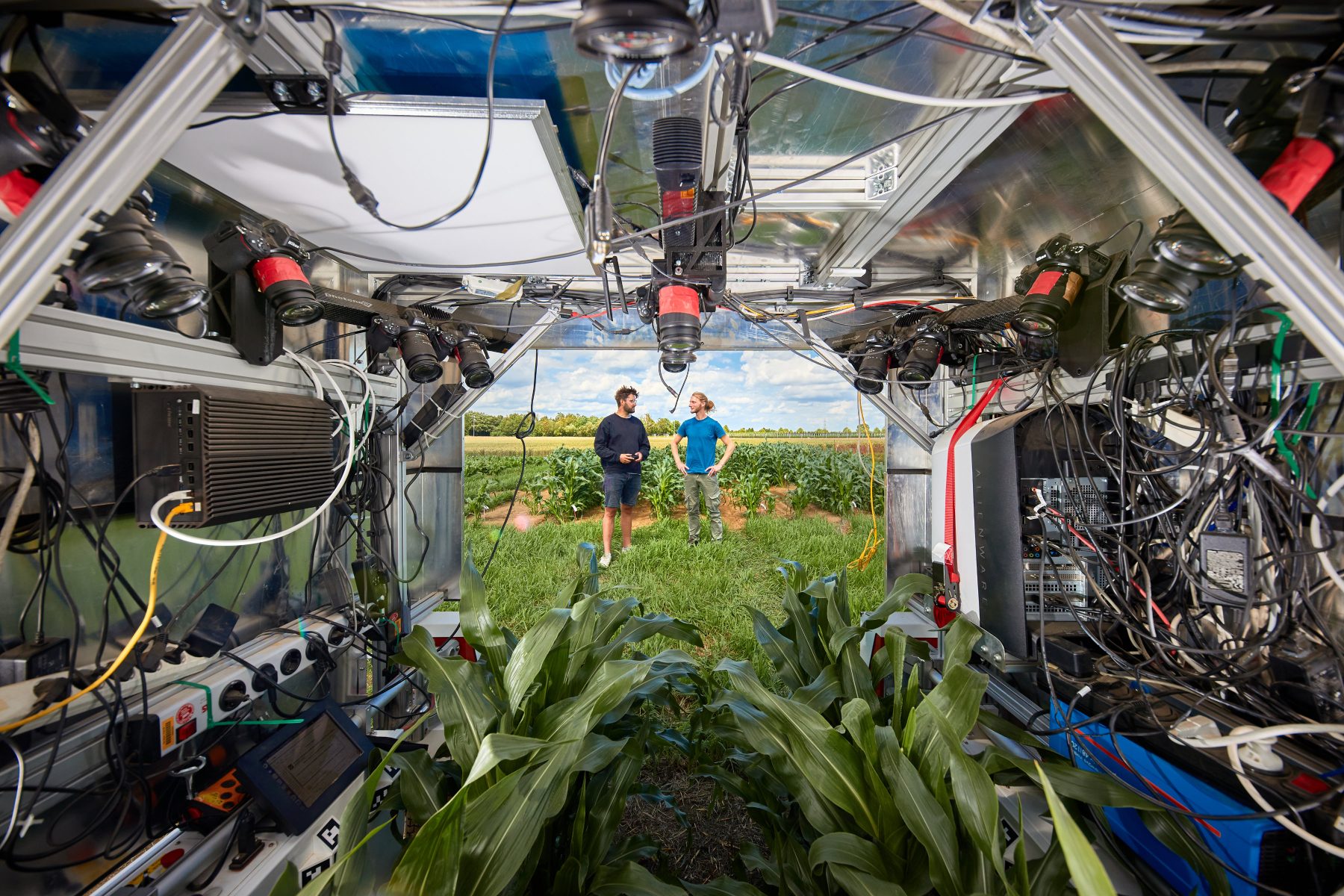
Digitalization and Circular Economy
Digital technologies gaining importance in agriculture. On the one hand these new technologies and their application has to be evaluated. On the other hand, digital technologies might improve the circularity of our economy. Both of these paths are focused in this project.
Our goal and ambition in teaching is to equip students with skills that will facilitate their path to personal success in their career. We want to promote the intrinsic motivation of students. Therefore, the connection of teaching to our current research is particularly important.
Winter term
- BAS-110 Extended Methods of Empirical Research (Master; WT 22-23)
- AGR-046 Business Planning and Organization (Bachelor)
- ABS-331 Research Seminar in Agribusiness (Master)
Summer term
- AGR-047 Economics III (Bachelor)
- AGR-074 Digital Transformation in Agribusiness (Bachelor)
- MAC-120 Behavioral Economics in Agri-Food markets (Master)
- ABS-331 Research Seminar in Agribusiness (Master)
Potential thesis topics
- Digital technologies in Agriculture (D. Hermann)
- Information provision to reduce pesticide use on the farm level (Hermann/Möhring: Link)
- Economic preferences of farmers – e.g., the influence of patience and risk aversion on decision-making (V. Berghoff). // Datasets from Ghana and China available for empirical research.
- Challenges and future perspectives in the wine sector: adaptation strategies to market trends, climate change, and changing demand (V. Berghoff).
- Perception of the bioeconomy among financial market participants (F. Grebe).
- Transparency and traceability along global agricultural supply chains (V. Berghoff).
- “Leaving no one behind”: Are the Sustainable Development Goals (SDGs) compatible with global trade in agricultural products? (V. Berghoff).
- Climate protection and alternative income sources through the development of a circular bioeconomy: e.g., the utilization of coconuts (V. Berghoff). // Dataset from Honduras available for empirical research.
- Systematic literature review: LCAs of Miscanthus-based building materials (Saskia Kulka)
- Systematic literature review: Cascading and end-of-life uses of bio-based (building) products (Saskia Kulka)
- Nudging and pro-environmental behavior (Yuxin Zhu)
- Norms and human behavior (Yuxin Zhu)
- Environmental policy assessment and its impact (Yuxin Zhu)
- Algorithm Aversion of farmers ( with Anna Massfeller: Link)
- Replication Study on Trust in AI (Cooperation with University Göttingen; with Hao Luo)
- Costs and benefits of improved manure management for smallholder farmers in Kenya/Uganda (with Mirja Michalscheck, Agroscope (CH))
- Socio-economic obstacles and opportunities towards improved manure management in smallholder farm systems in Kenya/Uganda (with Mirja Michalscheck, Agroscope (CH))
Jun-.Prof. Dr. Dr. Daniel Hermann

Franziska von Spreckelsen






Grebe, F., Grebe, L. & Hermann, D. (2026). Bioeconomy enters the market: The effect of bioeconomy policies on stock market returns. Research in International Business and Finance, forthcoming. https://doi.org/10.1016/j.ribaf.2026.103377
Berghoff, V. & Hermann, D. (2026). Time Preferences in Rural Economies: A Systematic Global Review. European Review of Agricultural Economics, forthcoming. https://doi.org/10.1093/erae/jbaf070
Zhu, Y., Lui, Z. & Hermann, D. (2026). Fabric of society: How social norms shape textile recycling practices. Sustainable Development, 34 (S1), 1112-1127. https://doi.org/10.1002/sd.70224
Luo, H., de Boer H., Mußhoff, O. & Hermann, D. (2025). Cooperative climate action under background risk. Scientific Reports 15, 27118. https://doi.org/10.1038/s41598-025-12340-9
Läpple. D., Colen, L. & Hermann, D. (2026). Information Economics to Support Sustainable and Resilient Agri-Food Systems. European Review of Agricultural Economics, forthcoming. https://doi.org/10.1093/erae/jbaf059
Luo, H., Bruns, S., Mußhoff, O. & Hermann, D. (2025). Sleep patterns, sociodemographic correlates, and their associations with economic preferences among Indian smallholder farmers. Scientific Reports 15: 25782. https://doi.org/10.1038/s41598-025-06482-z
Hermann, D., Bruns, S. & Mußhoff, O. (2025). Card or dice? An improved experimental approach to measure dishonesty. Journal of Economic Psychology 102802. https://doi.org/10.1016/j.joep.2025.102802
Zhu, Y., Liu, Z., & Hermann, D. (2025). How an energy policy prevents child migration: A natural experiment of the coal-to-gas policy in China. Energy Policy, 198, 114487. https://doi.org/10.1016/j.enpol.2024.114487
Block, J.B., Hermann, D. & Mußhoff, O. (2024). Agricultural soils in climate change mitigation: comparing action-based and results-based programmes for carbon sequestration. Climatic Change, 177(8): 130.
Block, J.B., Michels, M., Mußhoff, O., & Hermann, D. (2024). How to reduce the carbon footprint of the agricultural sector? Factors influencing farmers’ decision to participate in carbon sequestration programs. Journal of Environmental Management, 359: 121019.
Hermann, D. & Brenig, M. (2022). Dishonest online: A distinction between observable and unobservable lying. Journal of Economic Psychology 90: 102489.
Bruns, S., Hermann, D. & Mußhoff, O. (2022). Investigating inconsistencies in complex lotteries: The role of cognitive skills of low-numeracy subjects. Journal of Behavioral and Experimental Economics 97: 101840.
Wegmann, J., Hermann, D. & Mußhoff, O. (2022). Assessing risk attitudes and time preferences on the rural-urban interface of Bengaluru, India. Agricultural Finance Review 82(5): 828-846.
Parlasca, M.C., Hermann, D. & Mußhoff, O. (2020). Can mobile phones build social trust? Insights from rural Kenya. Journal of Rural Studies 79: 345-360 [Open Access].
Hermann, D., Mußhoff, O. & Rau, H. (2019). The Disposition Effect when deciding on behalf of others. Journal of Economic Psychology 74: 102192.
Hermann, D. & Mußhoff, O. (2019). I might be a liar, but not a thief: An experimental distinction between moral costs of lying and stealing. Journal of Economic Behavior & Organization 163: 135-139.
Rommel, J., Hermann, D., Müller, M. & Mußhoff, O. (2019). Contextual framing and monetary incentives in field experiments on risk preferences: Evidence from German
farmers. Journal of Agricultural Economics 70(2): 408-425.
Hermann, D. & Mußhoff, O. (2019). Displaying expected values in risk elicitation tasks: The effect of information in experimental risk research. Journal of Risk Research 22(2): 232-242.
Vollmer, E., Hermann, D. & Mußhoff, O. (2019). The disposition effect in farmers’ selling behavior - an experimental investigation. Agricultural Economics 50(2): 177-189.
Sauter, P., Hermann, D. & Mußhoff, O. (2018). Are foresters really risk averse? A multi-method analysis and cross-occupational comparison. Forest Policy and Economics 95 37-45.
Bauermeister, G., Hermann, D. & Mußhoff, O. (2018). Consistency of determined risk attitudes and probability weights across different elicitation methods. Theory and
Decision 84(4): 627-644.
Diekmann, J., Hermann, D. & Mußhoff, O. (2017). Wie hoch ist der Preis des Verzichts auf Kükentötungen? Bewertung des Zweinutzungshuhn- und Bruderhahnkonzepts als wirtschaftliche Alternative zu Mast- und Legehybriden. Berichte über Landwirtschaft
95(1): 1-22.
Hermann, D. (2017). Determinants of financial loss aversion: The influence of prenatal androgen exposure (2D:4D). Personality and Individual Differences 117: 273-279.
Hermann, D., Sauthoff, S. & Mußhoff, O. (2017). Ex-ante evaluation of policy measures to enhance carbon sequestration in agricultural soils. Ecological Economics 140: 241-250.
Rommel, J., Hermann, D., Müller, M. & Mußhoff, O. (2017). Comprehension in risk elicitation tasks: The effect of contextual framing and incentives. Applied Economics Letters 24(9): 627-634.
Vollmer, E., Hermann, D. & Mußhoff, O. (2017). An experimental approach to investment decisions of conventional and organic hog farmers. Canadian Journal of Agricultural Economics 65(2): 293-315.
Vollmer, E., Hermann, D. & Mußhoff, O. (2017). Is the risk attitude measured with the Holtand Laury task reflected in farmers’ production risk? European Review of Agricultural Economics 44(3): 399-424.
Hermann, D. & Mußhoff, O. (2016). Measuring time preference – Comparing methods and evaluating the magnitude effect. Journal of Behavioral and Experimental Economics 65: 16-26.
Hermann, D. & Mußhoff, O. (2016). Anchoring effects in experimental discount rate elicitation. Applied Economics Letters 23(14): 1022-1025.
Hermann, D., Agethen, K. & Mußhoff, O. (2016). Investment behavior and status quo bias of organic and conventional hog farmers: An experimental approach. Renewable Agriculture and Food Systems 31(4): 318-329.
Hermann, D., Rüther, D. & Mußhoff, O. (2015). Die Zeitpräferenz von Landwirten – Ein experimenteller Methodenvergleich. Swiss Journal of Business Research and Practice/Die Unternehmung 69(4): 396-417.
Holst, G.S., Hermann, D. & Mußhoff, O. (2015). Anchoring effects in an experimental auction - Are farmers anchored? Journal of Economic Psychology 48: 106-117.
Hermann, D., Agethen, K. & Mußhoff, O. (2014). Ein experimenteller Vergleich des Investitionsverhaltens ökologisch und konventionell wirtschaftender Schweinehalter in Deutschland. German Journal of Agricultural Economics 64(1): 1-15.